Irrigation Solar Canterbury: Solar pays on a pump that runs in daylight
The short answer
Solar on an irrigation connection saves the energy and the per-kWh lines charge, about 13 to 18 cents a kWh in our model, because Canterbury networks charge mostly for pump capacity. It pays when the pump runs in daylight: on our 100 ha pivot a 33 kW array pays back in 8 to 15.5 years that way, and 12 to 20 years with pumping spread across day and night.
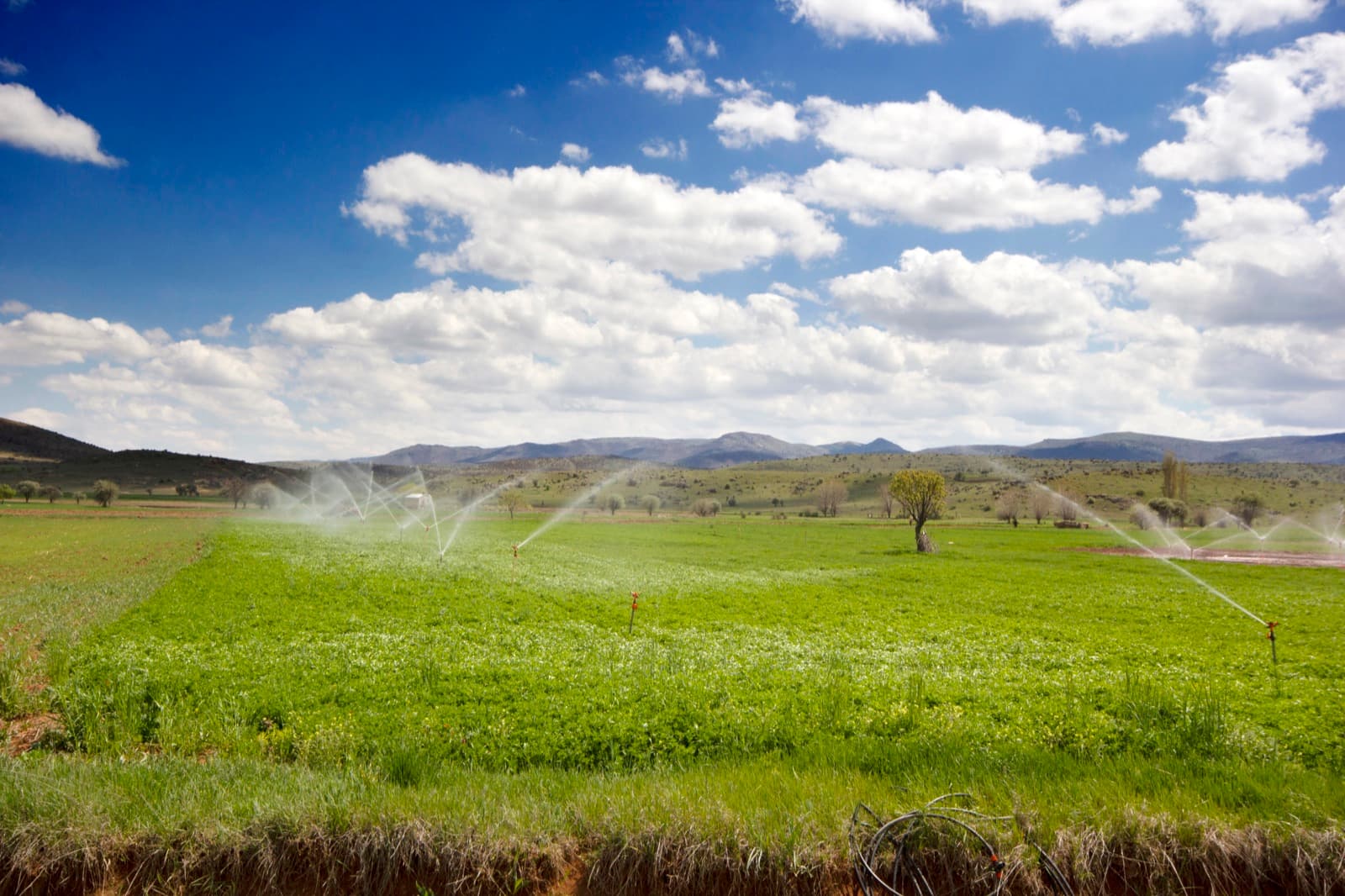
Canterbury has 63 percent of New Zealand's irrigated land, about 480,000 hectares (Stats NZ, 2022), and pumping is one of the largest power costs on an irrigated farm. Solar suits it by season, because pumps run hardest in the dry months when panels make the most. Whether it pays comes down to two things this page models: what solar can save on an irrigation connection, and how much of your pumping happens in daylight.
We are not an installer. Involve Energy models the system against your own pump and bills, arranges the financing stack and project-manages certified local crews through to commissioning, so you own the asset with an independent model behind it.
What solar saves on an irrigation connection
EA Networks charges $0.4856 per kW of pump capacity a day all year and Orion $0.7005 a day from 1 October to 31 March. That capacity charge is most of an irrigation lines bill, and solar on the same connection does not change it. What solar saves is the energy and the per-kWh lines charge, about 13 to 18 cents a kWh in our model, not the 20.4 to 25.5 cents we use for a general business connection. The connection must also stay dedicated, so the array cannot serve the house or the dairy shed.
Daylight pumping decides the payback
On our 100 ha pivot example, a 33 kW array pays back in 8 to 15.5 years when pumping is moved into daylight, and 12 to 20 years when the pump runs evenly across day and night. The table below assumes daylight pumping; at 100 kW with pumping spread across the day and night, the payback is 9.5 to 14 years. The full model, with pumping energy by water source and the season month by month, is in our irrigation guide.
How it works
01
Feasibility
Send twelve months of power bills, ideally half-hourly data. We model system size, generation against your actual load, self-consumption, cost, savings and payback on your numbers, not industry averages.
02
Financing
We apply the Investment Boost deduction and match the remainder to the best available green or interest-free business lending, sized so the repayment sits at or below your current bill wherever the numbers support it.
03
Installation
Certified local crews install and commission the system, whether roof-mounted at the pump shed or ground-mounted nearby. We manage the lines company approval, the electrical certification and the programme around the irrigation season.
04
Monitoring
Once live, we watch performance, flag anything underperforming and report your actual savings against the model, year after year.
Start with the estimate below, then send twelve months of half-hourly data from the irrigation connection for the version built on your own pumping. The wider costs and payback picture is in our commercial solar guide.
The numbers
What the numbers look like
| System size | Indicative installed cost | Indicative annual saving | Indicative payback |
|---|---|---|---|
| 30 kW | $54,000 to $78,000 | $5,000 to $6,000 | 8.5 to 16 years |
| 60 kW | $98,000 to $135,000 | $9,000 to $12,000 | 7.5 to 14 years |
| 100 kW | $140,000 to $180,000 | $15,000 to $20,000 | 6.5 to 11 years |
| 250 kW | $275,000 to $375,000 | $38,000 to $51,000 | 5 to 9 years |
Your numbers
Start from the example. Put in yours.
Your farm or business
Your indicative numbers
Conservative, ex GST, modelled not promised
Measure
- Power used
- 235,294 kWh a year
- Your spend at 25.5c a kWh ex GST, the national commercial average.
- Power bill
- $60,000 a year
Design
- System
- 97 kW
- Sized to your daytime load.
- Generates
- 127,070 kWh a year
- Used on site
- 75%
- The rest exports at 8c a kWh.
- Installed cost
- $137,463 to $177,926
- Confirmed with certified installers.
Finance
- Investment Boost, year one
- about $8,831
- A 20% immediate tax deduction, worth this in cash at the 28% company rate. Not a discount.
- ASB Smart Solar Loan
- $2,500 a month
- 0% for 5 years, on the first $150,000; the remainder is financed separately, and the full stack is part of the feasibility study. Reverts to a floating business rate after five years. Terms checked against asb.co.nz on 8 October 2026. ASB may change or withdraw the offer; the calculator only shows it while it matches.
- Estimated saving
- $1,443 a month
- Mid estimate, set against the repayment while the loan runs.
Outcome
- Saving
- $14,931 to $19,696 a year
- Payback
- 6.5 to 11 years
- Net of the Investment Boost benefit.
- Emissions avoided
- 7.1 t CO₂e a year
- Asset life
- 25+ years
- Panels keep producing long after payback.
How this is modelled (assumptions v2026-10-v7)
- Power valued at $0.13 to $0.18/kWh ex GST (an irrigation connection pays mostly per kW of pump capacity, which solar cannot cut, so solar avoids only the energy and the per-kWh lines charge).
- The pump uses 75 percent of the output when pumping is moved into daylight, 25 percent when it runs evenly across day and night; the irrigation connection carries no other load, so the rest exports.
- Export credited at $0.08/kWh, the conservative end of current buy-back rates.
- Installed cost interpolated from 30 kW ($1,800 to $2,600/kW) down to 500 kW ($1,100 to $1,500/kW), 2025/26 working ranges.
- Canterbury yield modelled at 1310 kWh per kW per year.
- Self-consumption capped by your daytime usage profile and held below typical vendor claims; sizing targets 90 percent of daytime load.
- Investment Boost stated as the year-one cash value of the 20 percent immediate deduction at the 28 percent company rate. It is a tax timing benefit, not a discount.
- No power price escalation and no panel degradation in simple payback; omitting escalation outweighs degradation, so the net effect is conservative.
Indicative only; not financial or tax advice. The feasibility study models your site from twelve months of actual bills.
Next step
Get these numbers checked properly
The real model is built from twelve months of your bills. Send your details and we will do it for you; we reply within one working day, no obligation.
Straight answers
The questions we get asked
Is irrigation a good match for solar?
By season, yes: pumps run hardest in the sunny months. By the hour, only if you make it one. Orion's irrigation customers use power across the week in almost the same shares as the hours, so pumps run at night about as much as by day, and run that way a pivot uses about 27 percent of an array's output in our model. Move pumping into daylight where the system's capacity allows and it uses about 78 percent.
Can solar run irrigation pumps directly?
A pivot pump is too large to run from panels alone, so the array is grid-tied to the pump's own connection: generation runs the pump whenever both are going and the grid supplies the rest. Keep the array at or below the pump's power so a running pump uses everything it makes.
What does solar save on an irrigation connection?
Less than on a shed or factory connection. EA Networks charges $0.4856 per kW of pump capacity a day all year and Orion $0.7005 a day from 1 October to 31 March, and solar does not change that. It saves the energy and the per-kWh lines charge, which we value at 13 to 18 cents a kWh. DairyNZ puts the median irrigation cost on Canterbury owner-operator dairy farms at $0.27 per kg of milksolids in 2024-25.
What happens outside the irrigation season?
The array keeps generating and the pump does not. Irrigation connections in Canterbury must stay dedicated, with no house or shed on the same supply, so that output exports at your retailer's buy-back rate. The model counts the whole year, not just the season.
How is an irrigation solar system financed?
Like any on-farm system: the Investment Boost tax deduction alongside rural green lending, including dated rural offers such as ASB's Smart Solar Loan, which our calculator shows only while its terms are verified against ASB's own page. We set the repayment next to the saving so you can see the monthly position while the loan runs.
Test your pump against the sun
Send twelve months of data from the irrigation connection and we will model size, cost, savings and payback at your pumping pattern, and what moving pumping into daylight is worth. Independent, no obligation, yours to keep.